Best Automatic Pet Feeder Guide: Smart Scheduling & Nutrition
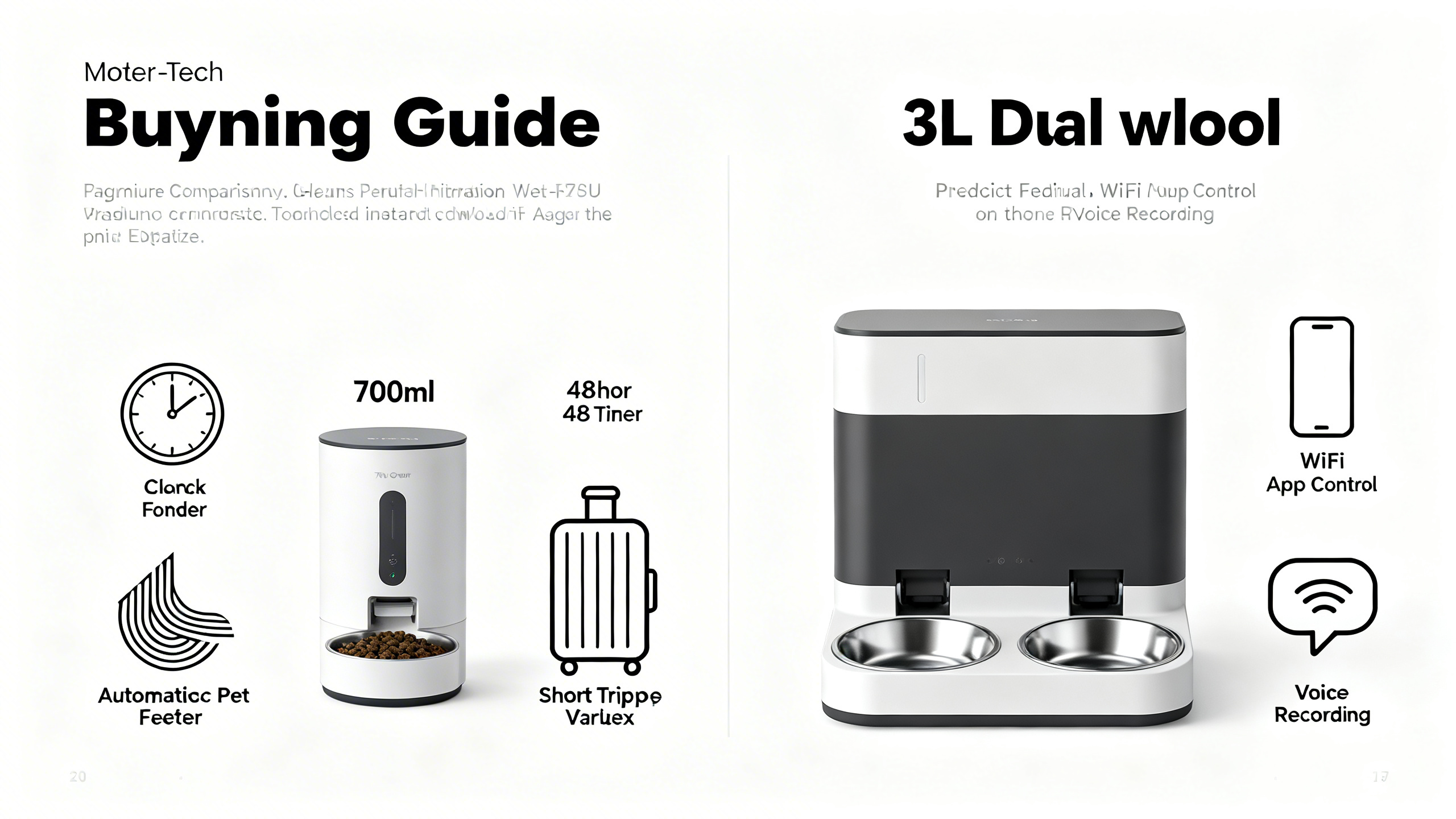
A “set-and-forget” feeder used to mean a simple timer and a hope that nothing jammed. Now, the category spans everything from a 700ml, 2-meal unit with a 48-hour timer to a 3L, dual-bowl WiFi feeder with app control and voice recording—two very different answers to the same modern problem: keeping pets consistently fed even when life gets chaotic.
Smart feeders are splitting into two clear camps
The biggest shift in automatic feeding isn’t just “more technology.” It’s specialization. On one end, you have compact, short-horizon feeders designed for tight schedules and short trips—like a dual-bowl, 700ml setup that covers two meals across a 48-hour window. These models are often ideal for cats and small dogs who eat measured portions and don’t need a week’s worth of kibble on standby.
On the other end are higher-capacity, connected systems: dual-bowl feeders sized around 3L that support WiFi, app scheduling, and features like voice recording. The capacity jump matters because it changes the role of the feeder. Instead of “help me get through tomorrow,” it becomes “help me maintain a routine for days,” which is especially useful for multi-pet households or anyone who works unpredictable hours.
Both camps emphasize something pet parents increasingly value: routine. Even small deviations—breakfast drifting later and later, or dinner portions creeping up—can affect weight and behavior over time. Choosing between a simple timer feeder and a connected one is less about novelty and more about how much control you need over the routine.
Portion control meets multi-pet reality (and why dual bowls matter)
Dual-bowl designs show up in both “simple timer” and “WiFi app” feeders for a reason: feeding two pets is rarely as simple as doubling the food. Cats, in particular, can be picky, competitive, or prone to overeating. A dual-bowl layout can reduce stress at mealtimes by giving each pet a dedicated space, while still keeping the feeding process centralized and predictable.
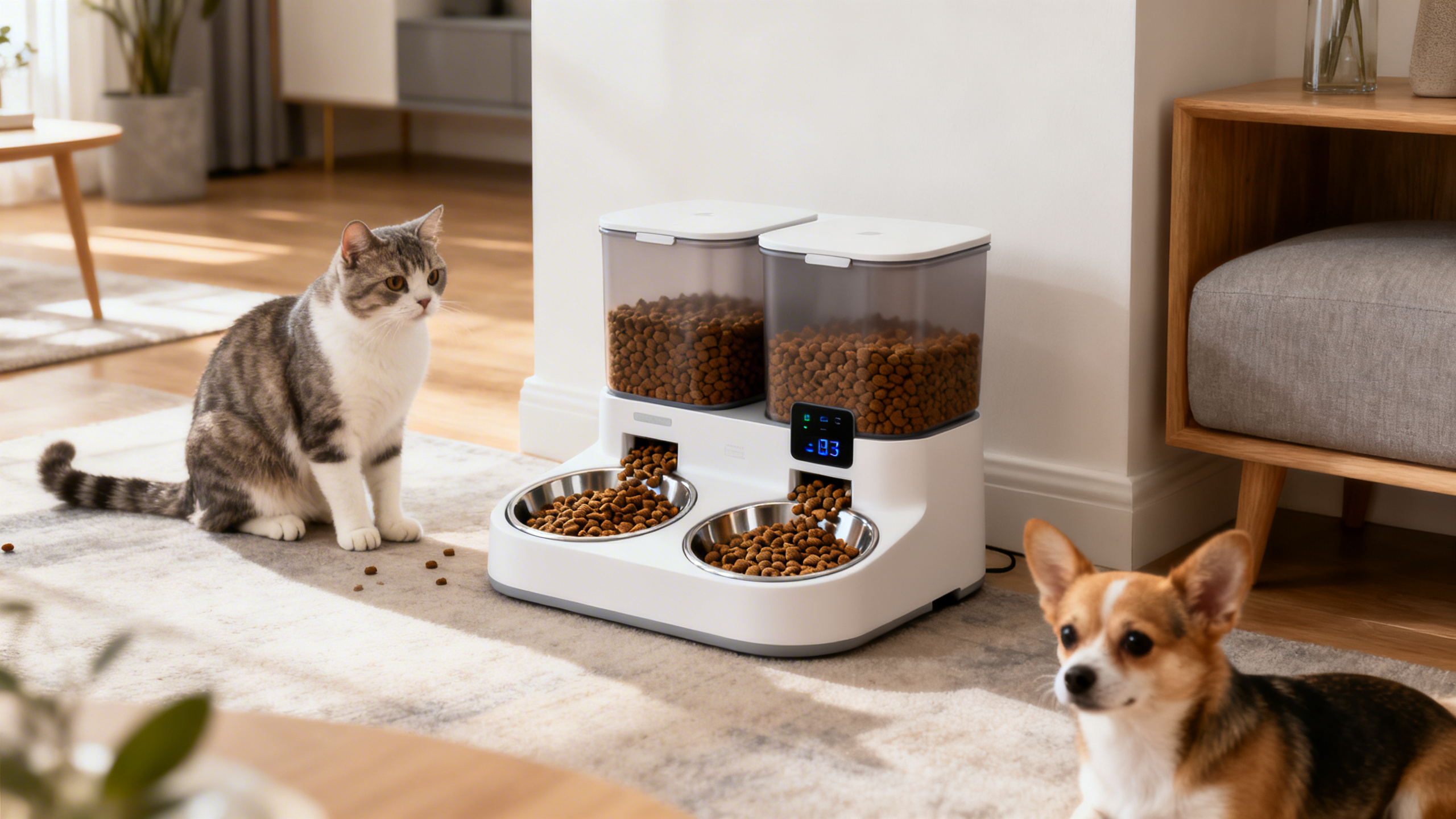 But dual bowls don’t automatically solve unequal appetites. One cat may graze while another inhales. In that scenario, feeder choice should be paired with a realistic strategy:
- If you need strict control: prioritize models that let you set schedules precisely and adjust portion sizes per meal in small increments.
- If your pets eat at different speeds: schedule smaller, more frequent meals so a fast eater can’t “steal” an entire large portion from a slower eater.
- If your routine changes weekly: app control becomes more than a convenience; it’s a tool for preventing accidental overfeeding when your day runs long.
When you’re evaluating Automatic cat and dog feeders, think beyond the product photo. Ask: will this feeder help me maintain consistent portions and reduce competition, or will it simply dispense food on time while my pets sort it out themselves?
That question leads naturally to the next issue—what you’re dispensing and how diet quality interacts with feeding tech.
Feeding tech can’t outsmart poor nutrition—but it can support better habits
Automatic feeders are great at consistency, but they won’t fix a mismatched diet. This is where pet nutrition trends matter. Many cats are notoriously selective, and “picky eater” behavior often pushes owners toward frequent food changes, excessive treats, or free-feeding—habits that make calorie control difficult.
One reason certain brands gain attention is palatability: if a cat reliably eats a complete, species-appropriate formula, scheduling becomes easier and less stressful. Reviews of picky-eater-friendly foods highlight a common theme: ingredient quality and species-appropriateness influence not only health outcomes but also day-to-day feeding compliance. In practical terms, a cat who likes their food is a cat you can successfully transition to measured, scheduled meals—exactly what automatic feeders are built for.
Actionable tip: If you’re introducing an automatic feeder, don’t change foods at the same time. Keep the diet stable for 1–2 weeks while your cat learns the new routine. Once the schedule is established, then consider diet tweaks if needed. This reduces variables and helps you spot whether issues are behavioral (new feeder) or nutritional (food doesn’t agree).
Also, remember that consistent feeding pairs best with consistent hydration. If you’re tightening portions or switching from wet-heavy to dry-heavy feeding, water intake becomes more important—which is why many households add moving-water systems alongside smart feeders.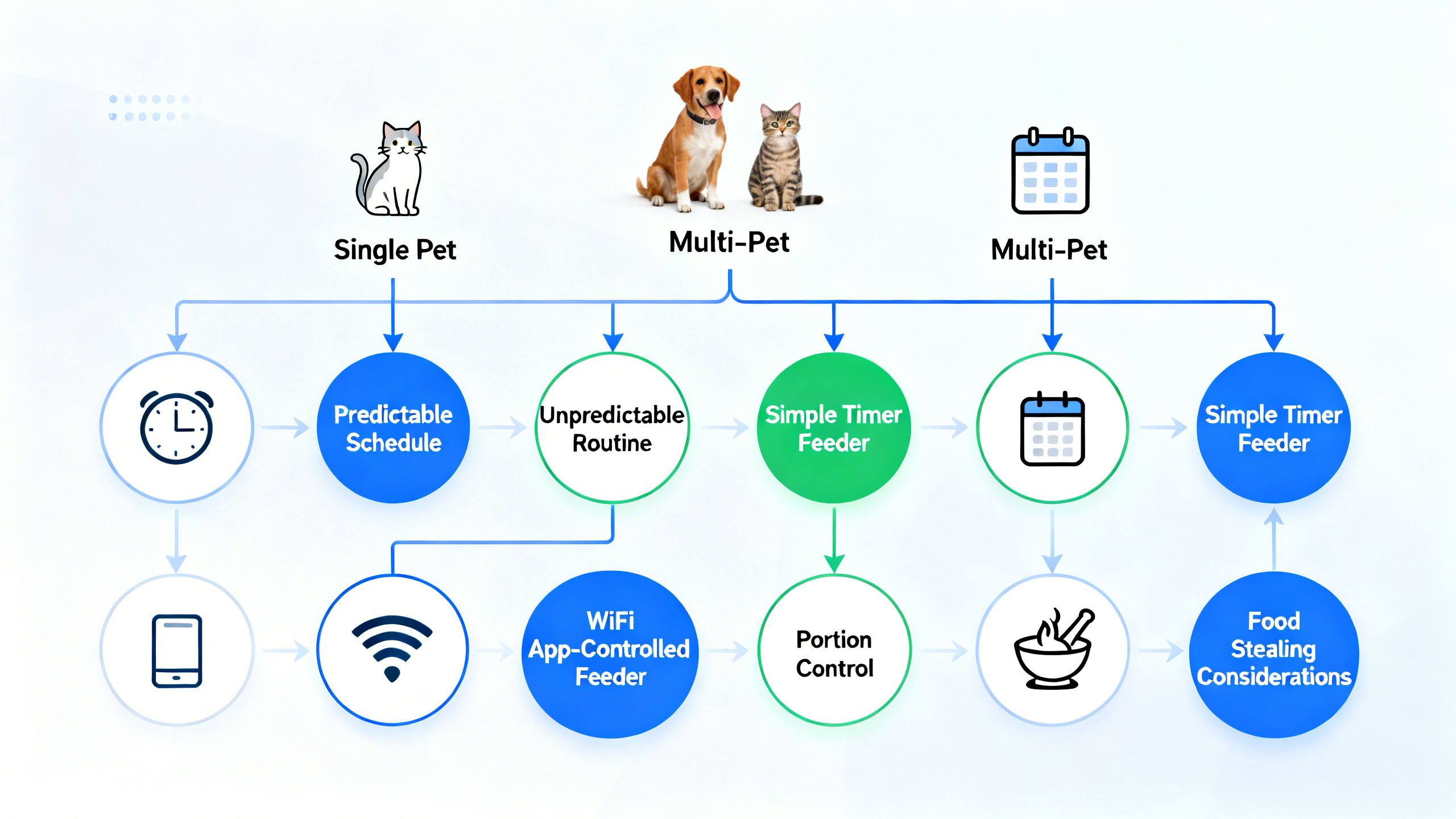
Why pet food manufacturing expansion affects what ends up in your feeder
Behind every “smart” feeding plan is a supply chain that determines availability, pricing, and product variety. Major manufacturers are actively expanding capacity across regions, which can influence everything from lead times to private-label options.
One large private pet food producer recently completed two acquisitions in rapid succession: a modern facility in Drummondville, Quebec that began operations in 2023, and a 30,000-square-meter dry pet food factory in Turkey with an annual capacity of 40,000 tons. The Turkey site includes milling, extrusion, drying, vacuum coating, and packaging—an end-to-end setup that can scale output quickly and serve multiple markets.
What does that mean for pet parents using automatic feeders?
- More stable access to staples: High-capacity dry production can support consistent availability of core kibble lines—important if your feeder and your pet both do best with one predictable formula.
- More private-label and contract options: Expanded manufacturing networks often increase the number of comparable formulations on shelves, which can be helpful if your preferred product is out of stock or reformulated.
- Potential for more specialized formats: Investments in wet food (pouches, trays, cans) and treat capabilities can support rotational feeding strategies—useful for picky cats—without abandoning portion discipline.
In short, feeder technology is only half the system. The other half is your ability to consistently buy the food that works for your pet. Growing production footprints in Canada, Turkey, and elsewhere can reduce friction for households trying to stay on a stable nutrition plan.
And as feeding becomes more structured, water becomes the next “smart” upgrade.
Build a complete routine: pair timed meals with smarter hydration
 Scheduled feeding shines when it’s part of a routine ecosystem. If meals are predictable but water is stagnant or ignored, some pets—especially cats—may under-hydrate. Many owners address this by adding circulating water systems that encourage drinking through movement and freshness cues. This is particularly relevant for cats eating more dry food from an automatic dispenser.
When you’re planning a routine, consider placing water away from the feeder area to reduce guarding behavior and to mimic a more natural pattern (separate “hunt” and “drink” zones). If hydration is a concern, adding Automatic Pet Fountains can be a simple, practical complement to timed meals.
Quick comparison to choose your setup today:
- 2-meal, 48-hour timer feeder (700ml dual bowl): best for short trips, predictable schedules, and pets who do well with two pre-set meals.
- 3L dual-bowl WiFi feeder with app + voice recording: best for multi-pet households, variable schedules, and owners who want remote adjustments and tighter routine control.
Either way, your goal is the same: consistent portions, less guesswork, and a feeding plan your pet actually follows.
Conclusion: Automatic feeders are evolving from basic timers into routine-management tools, with clear options for short-horizon simplicity or app-controlled flexibility. Combine the right feeder capacity with a diet your cat reliably eats, then support the routine with hydration habits that match your feeding style. As manufacturing capacity expands and smart pet tech improves, feeding plans will become more personalized—and easier to keep consistent over the long term.